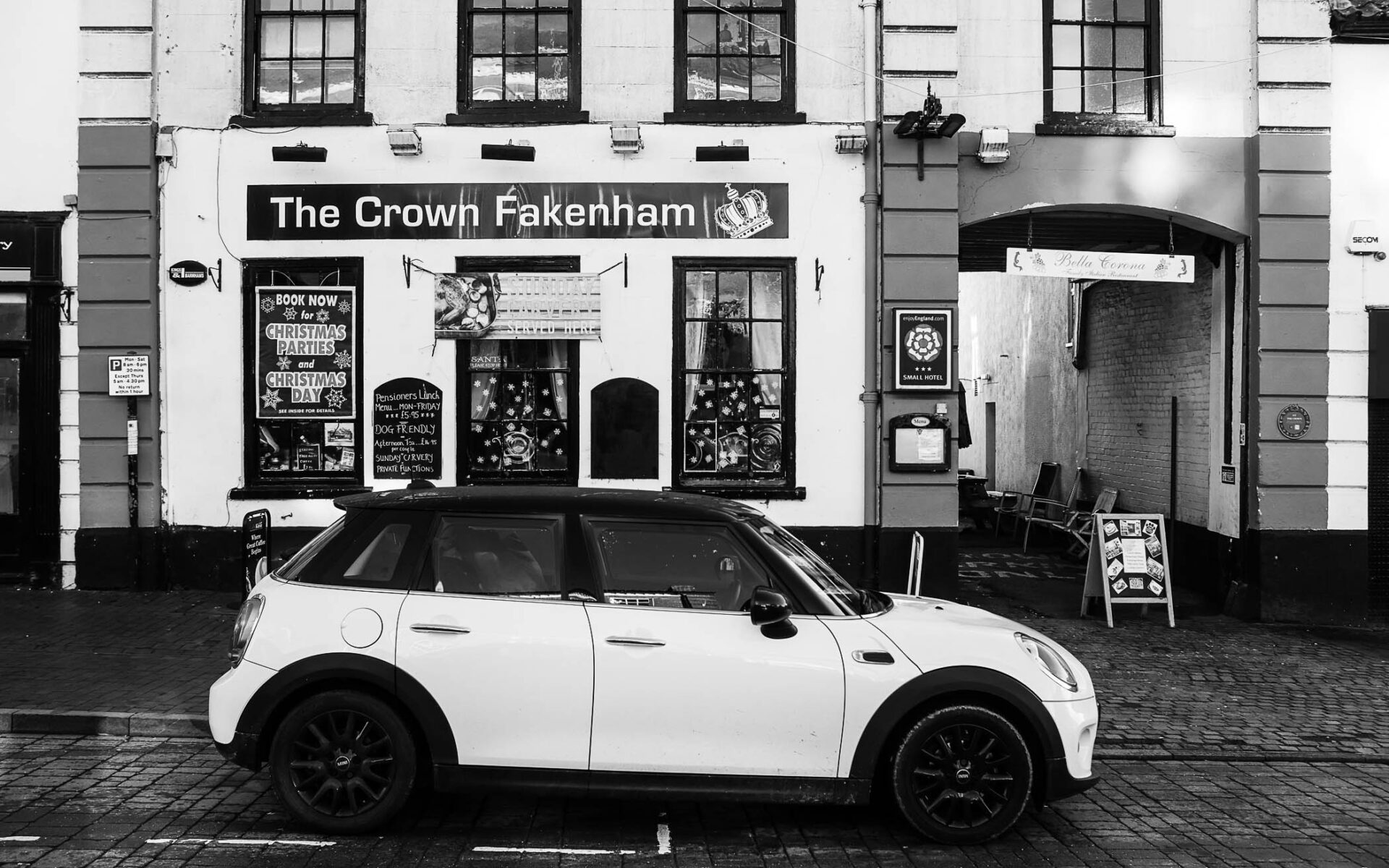
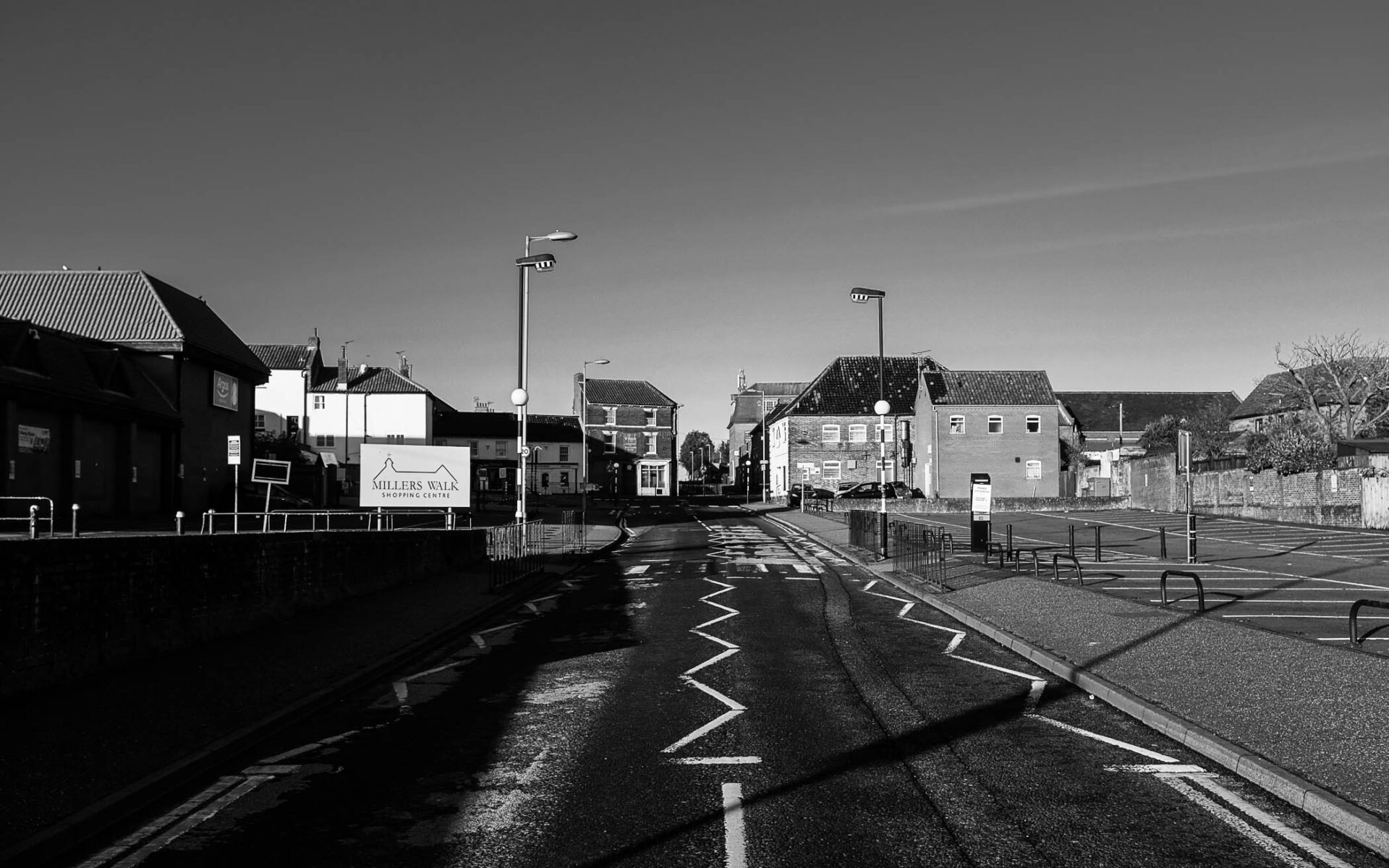
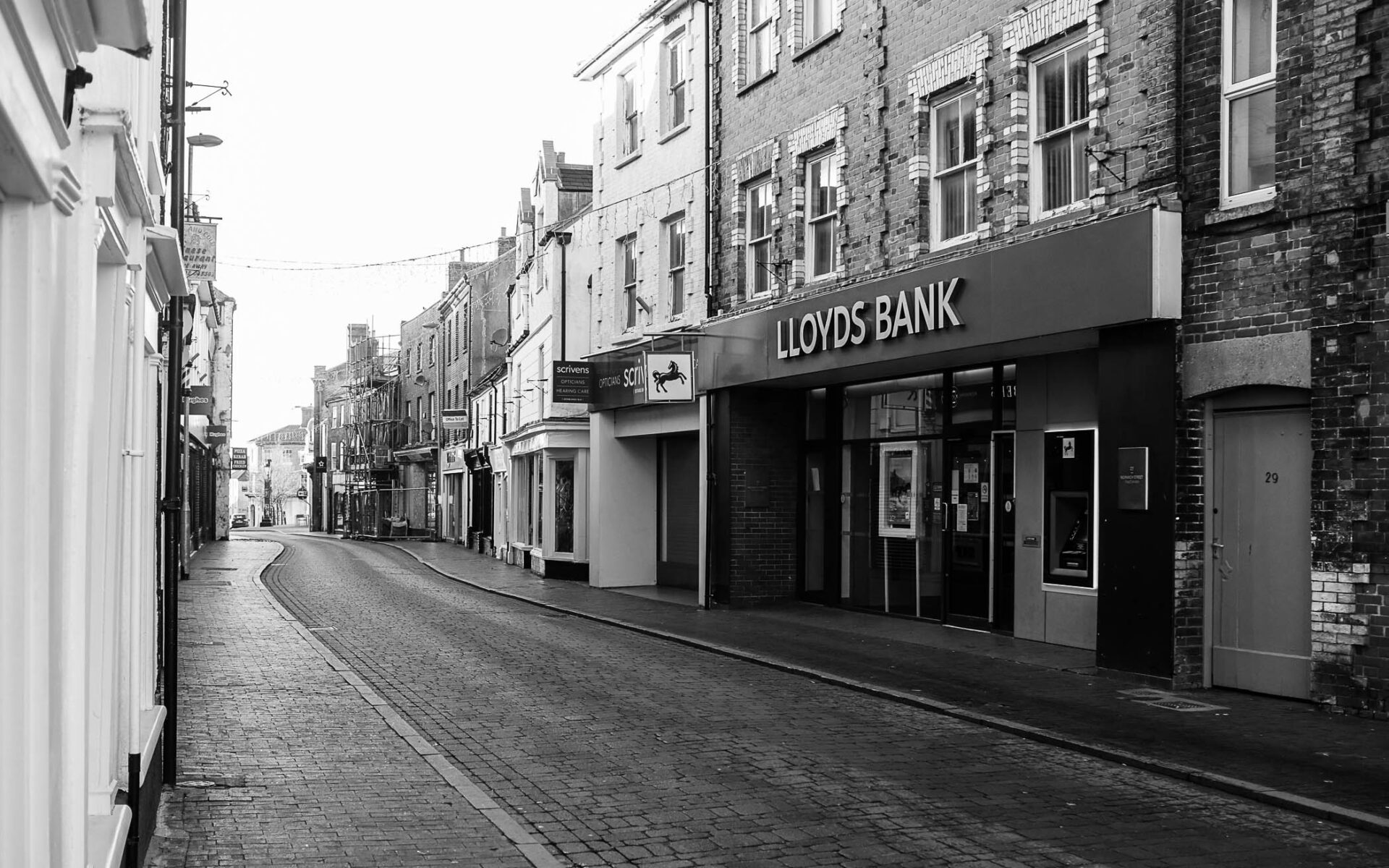
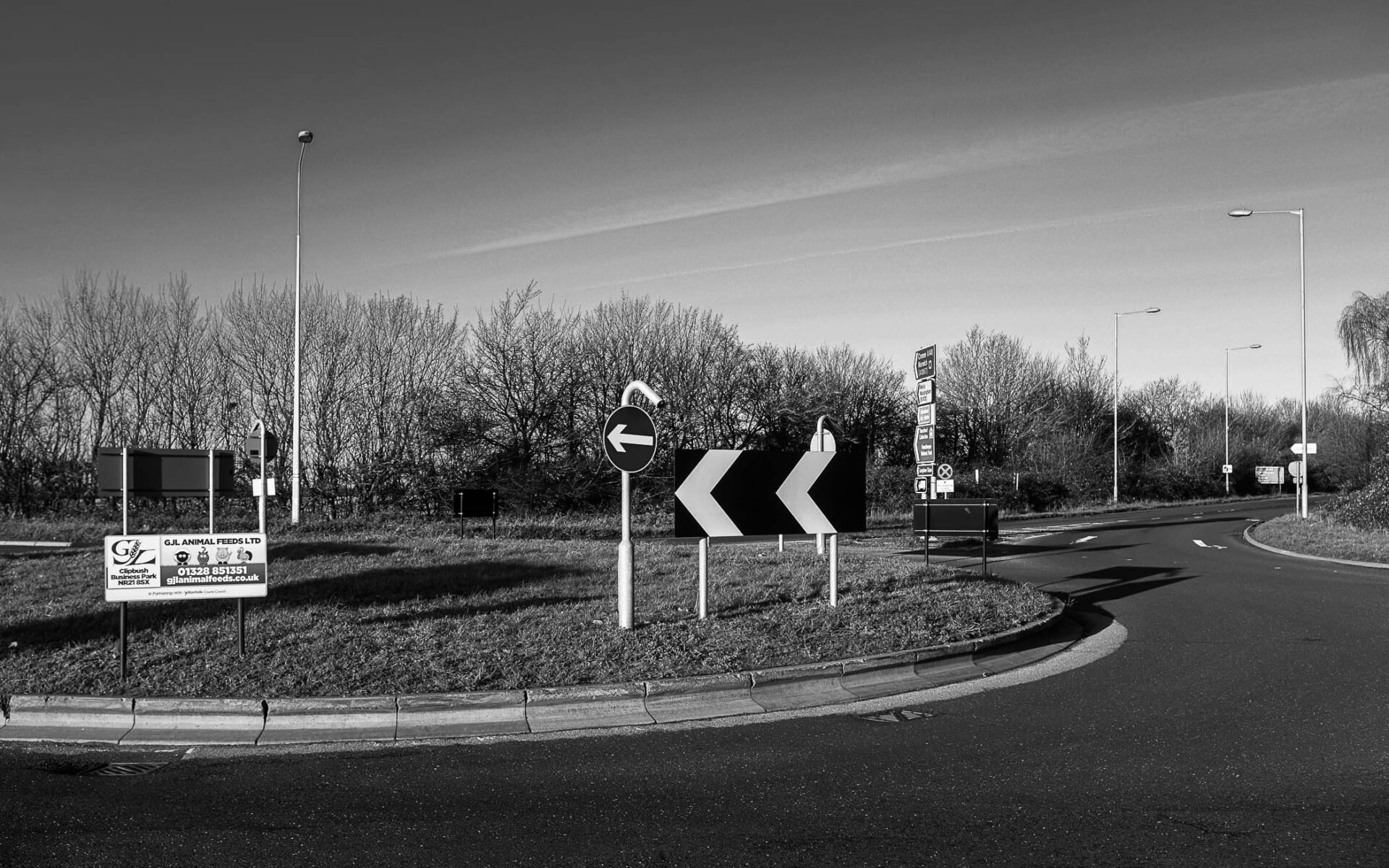
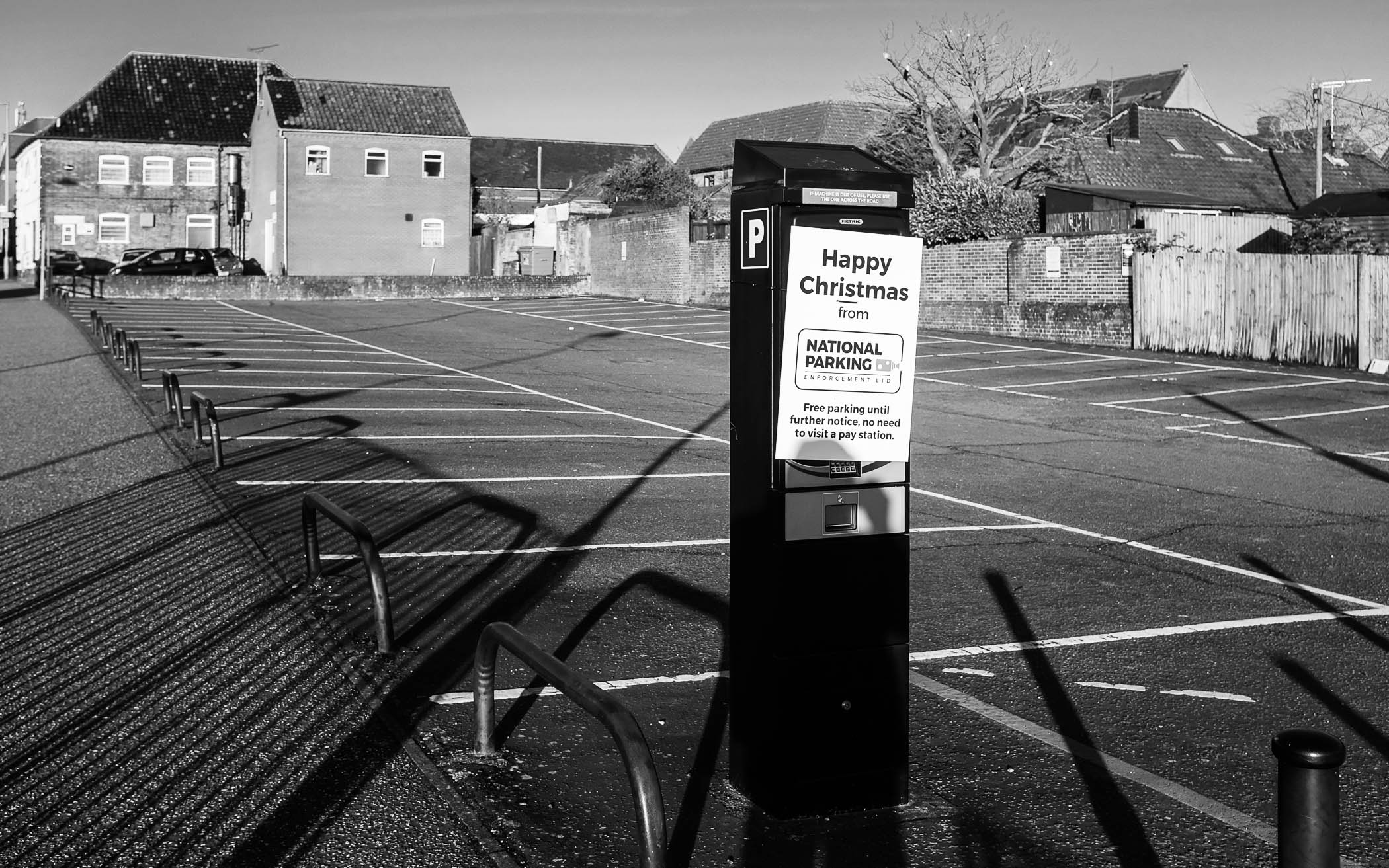
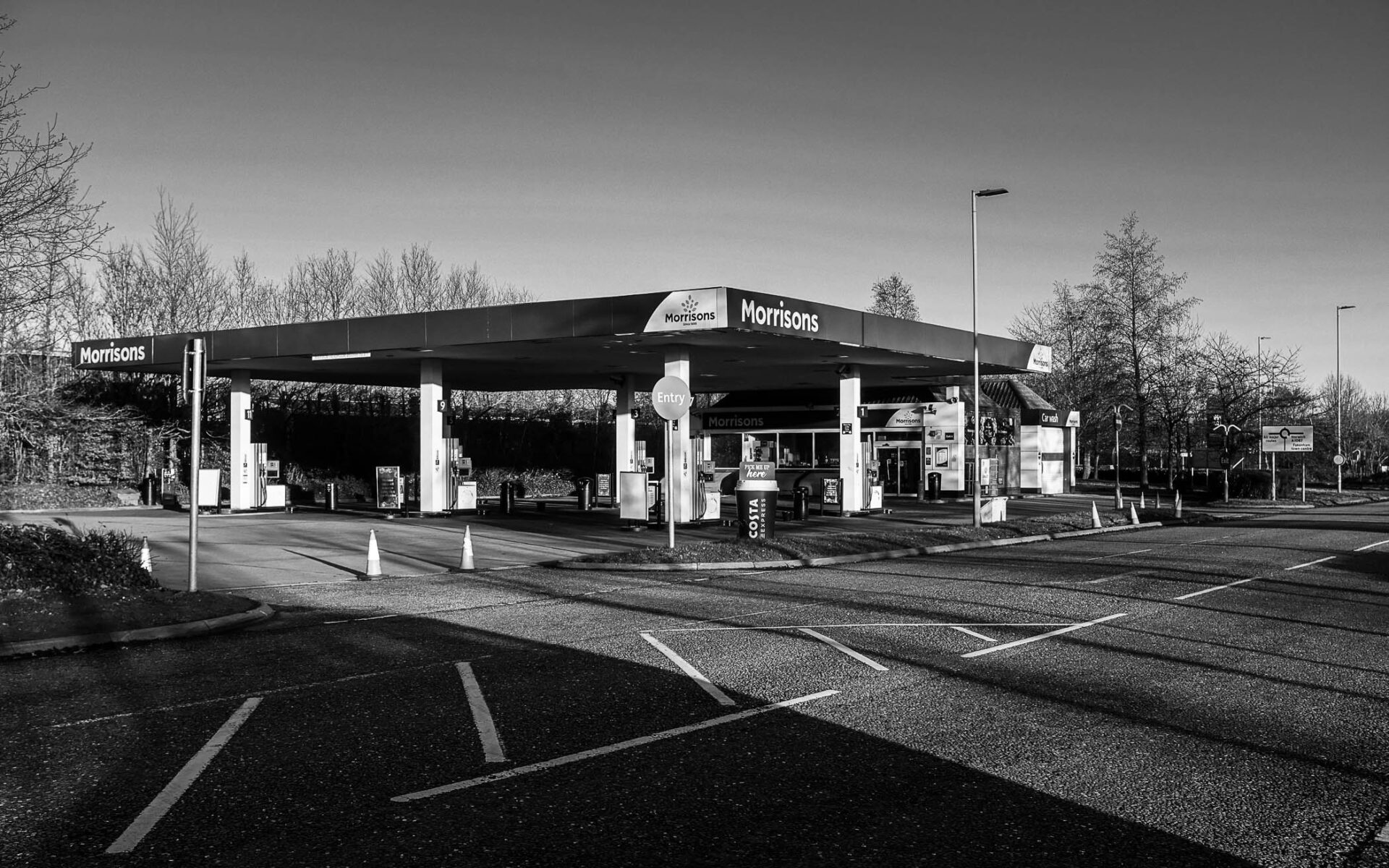
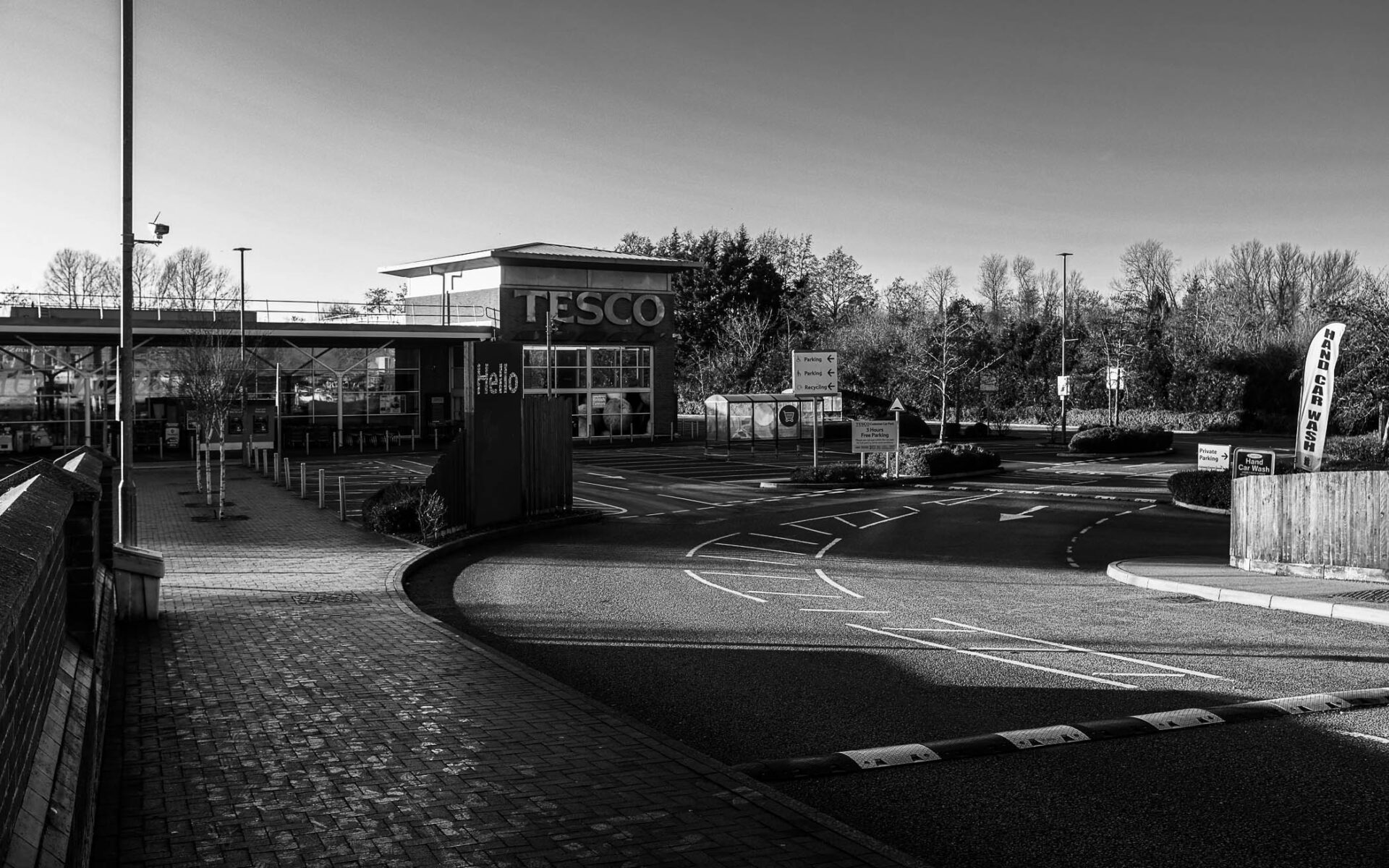
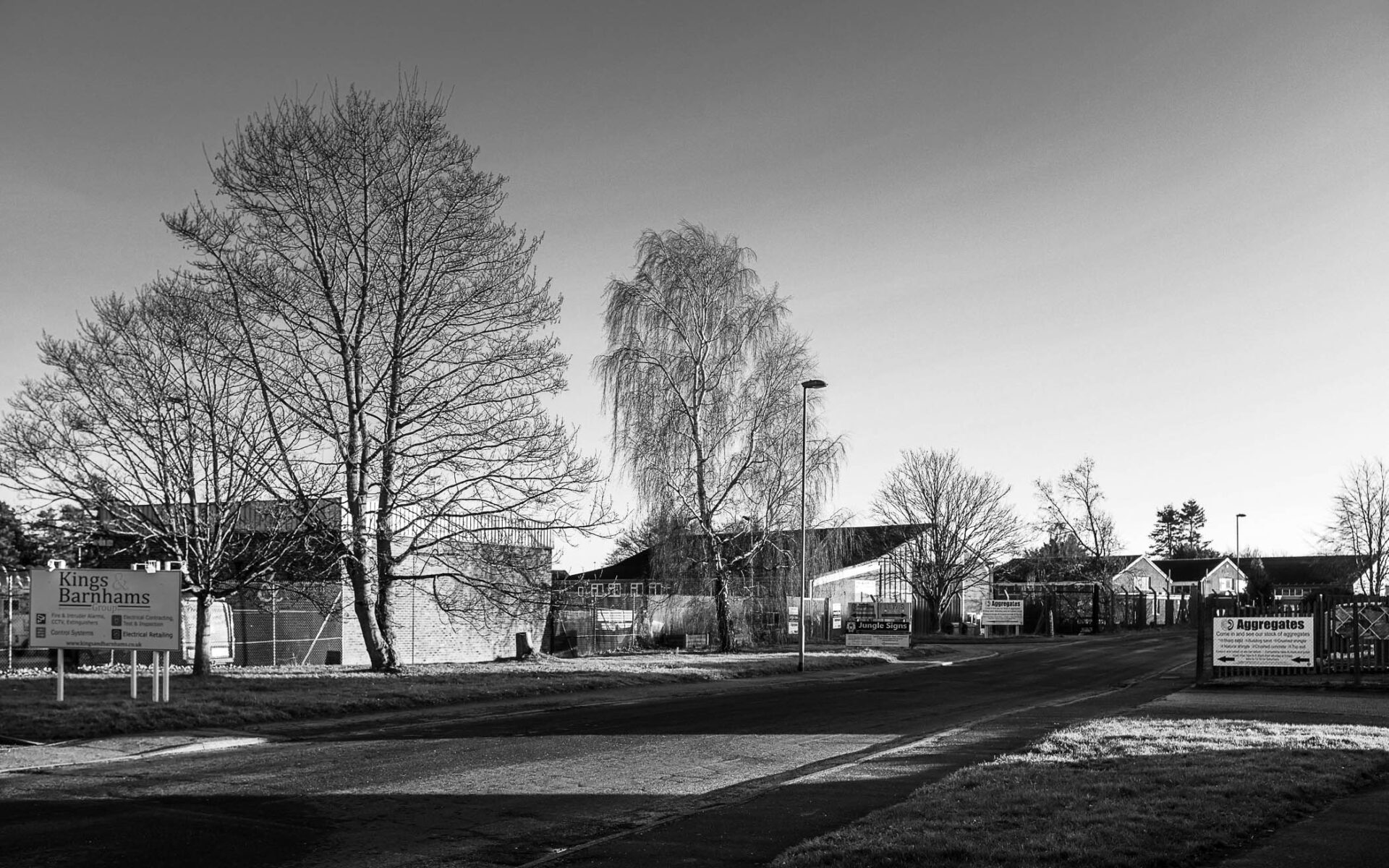
Even at the end of 2019, we had not heard of COVID. Like everyone else, Keith had no sense of what was about to unfold. Yet, in hindsight, the photographs he made on Christmas Day that year seem almost to foreshadow the lockdowns that would follow only a few months late.
He took an hour that afternoon to photograph his hometown of Fakenham in Norfolk. At around 2pm the town was, unsurprisingly, deserted: people were at home sharing drinks, watching films, preparing or eating Christmas dinner, spending time with family — not out on the streets. Christmas is, after all, one of the most intensely family‑centred days of the year. As a result, he had the place almost entirely to himself.
It was a bright but cold day, with long shadows cast by the low winter sun — ideal conditions for the black‑and‑white photographs he wanted to make. Everywhere was empty. Everything closed. No vehicles, no people. The only sign of activity was Christmas lunch being served at The Crown. He walked and drove around the town, enjoying the unusual freedom of being able to stand in the middle of the road to make photographs he could not normally take. The quiet was striking: no traffic on the main roads or roundabouts, the petrol station closed and bollarded, supermarkets locked, car parks empty.
He felt a sense of freedom, and an eerily altered experience of a town he thought he knew well. Little did he know that just three months later the COVID pandemic would arrive, the country would enter lockdown, and he would find himself making very similar photographs — but for entirely different reasons
This photo essay was published as NotQuiteFree Press Issue #1 in October 2022: